With the AI boom, RAM prices aren’t showing any signs of slowing down—and I’m sure PC builders and tech enthusiasts in general are checking their cortisol levels day and night watching RAM prices increase.So what’s really going on?
Why Is AI the Major Reason Behind This Price Surge?
AI is the most obvious—and biggest—reason behind the surge. Major AI companies like OpenAI, NVIDIA, Google, and others are racing to build massive AI data centers, each with insane energy, water, and, of course, computer memory requirements.
These major players are using their seemingly endless investment capital to buy up enormous amounts of memory. In fact, one of the major memory makers, Micron, has even announced its exit from the Crucial consumer business.
And here’s where the real bottleneck begins.
There are only three major RAM manufacturers—Micron, SK Hynix, and Samsung—which together control around 90% of the global market. That doesn’t leave consumers with many options. Limited supply combined with relentless demand is a perfect recipe for soaring prices.
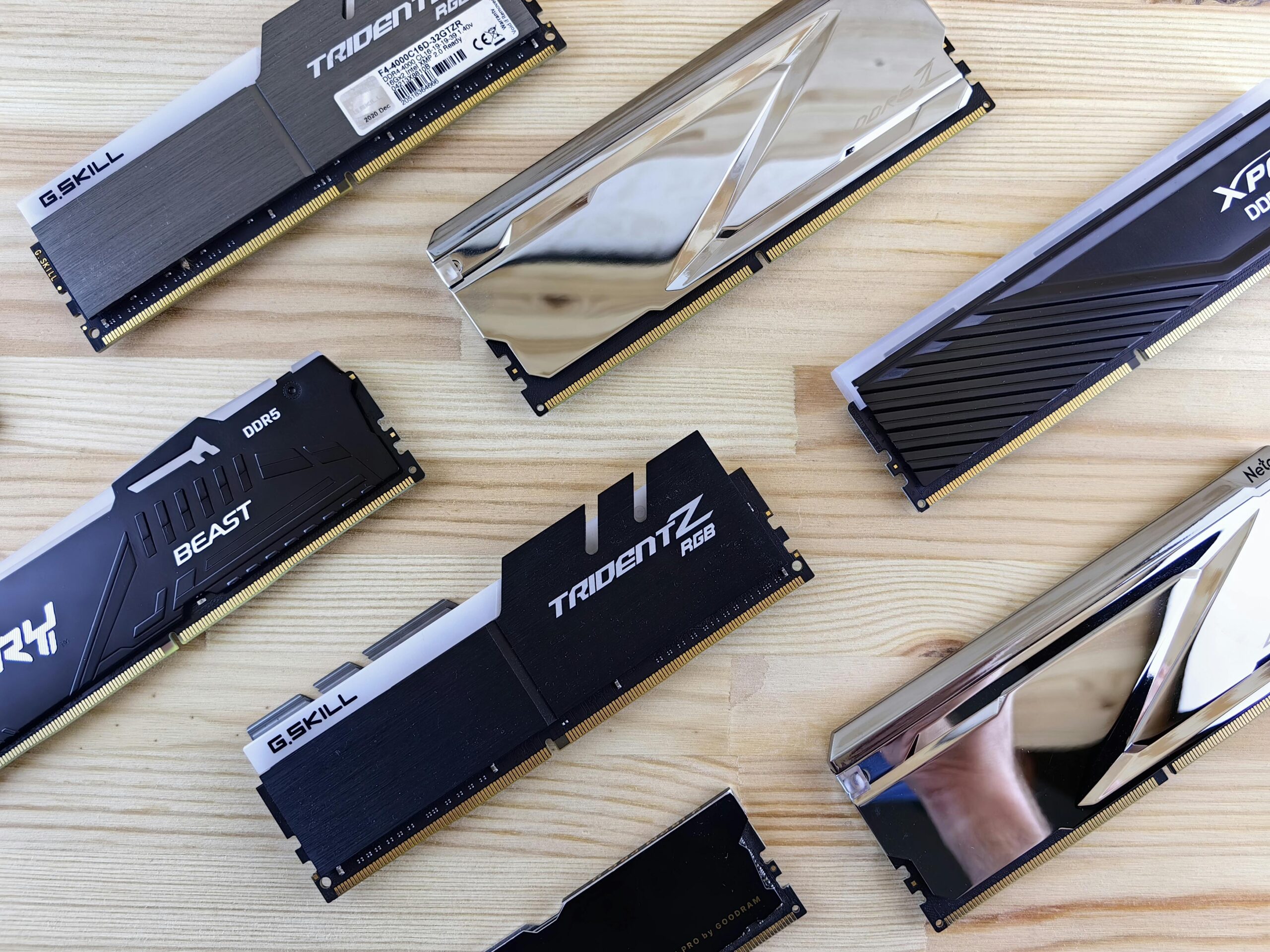
You might argue that there are other brands like Corsair, Crucial, and Kingston—and that’s true. However, these companies mainly assemble RAM modules (the sticks that go into your motherboard). The actual DRAM chips inside those modules are still manufactured almost exclusively by these three giants.
Why Does AI Need So Much RAM?
AI models like ChatGPT, DeepSeek, and Gemini run on LLMs (Large Language Models). These models are trained by feeding them enormous amounts of data—and by enormous, I mean A LOT.
Training data includes text, audio, video, images, and often a combination of all of these. In today’s AI race, the best models are the ones that can process and learn from the largest possible datasets.
This is where RAM becomes critical.
RAM is significantly faster than SSDs and offers much more capacity than the CPU cache. For large data centers, huge amounts of RAM help speed up both:
Training, where models learn from massive datasets
Inference, where the trained model interacts with users
For example, more RAM allows AI systems to reference long conversations quickly and generate better, more context-aware responses.
Why Can’t They Just Produce More RAM?
Even though existing fabrication plants (fabs) run 24/7, they still can’t keep up with demand. And increasing production isn’t as simple as it sounds.
Manufacturing RAM is an extremely delicate and precise process. A single defect can ruin an entire batch, delaying production by weeks—or even months.
Building new fabrication facilities isn’t a quick fix either. Constructing a silicon fab—whether for CPUs, GPUs, or RAM—takes years, due to infrastructure complexity, regulatory approvals, and supply chain constraints, even with perfect planning.
Another Uncomfortable Truth: They Don’t Really Want To
This isn’t the first time we’ve seen RAM prices surge.
In the early 2010s, especially around 2015, RAM prices spiked due to the rapid adoption of smartphones in markets like India and the growing demand for modern tech devices. Back then, manufacturers ramped up production aggressively.
Consumers loved it.
Manufacturers didn’t.
When demand later cooled, these companies were stuck with massive overstock, which eventually caused prices to fall.
And as hard as it is to scale production up, it’s just as difficult—and expensive—to scale it back down. So today, manufacturers are far more cautious and prefer a tighter supply with higher margins.
The Good News
Right now, RAM demand and prices show no signs of slowing down, largely because they’re tied to the ongoing AI boom—which likely won’t last forever.
According to recent reports by CNBC, there are already early signs of this AI bubble beginning to crack.
Even if the bubble bursts, RAM demand probably won’t disappear—just like demand didn’t vanish after the smartphone or PC booms. However, we may see demand stabilize, and prices cool down from current highs.
Another positive development is the entry of a Chinese company that claims to have built a facility capable of producing DDR5 RAM. While we won’t dive into details here, you can read more about this in a separate blog published by tom’sHARDWARE
What Can We Do as Customers?
Rising RAM prices don’t just affect RAM itself—they increase the cost of everything that uses memory. From the PlayStation 5 to smartphones, smartwatches, cars, and beyond, the ripple effect is everywhere.
For now, there isn’t much consumers can do except watch the bubble either grow larger or eventually burst.
So what do you think the future of RAM looks like for consumers?
Will buying a single RAM stick soon feel as expensive as buying a fully built gaming PC?


 Siddharth Jangid